If you have ever wondered why two Windermere lakefront homes can differ in price by six or even seven figures, you are not alone. The Butler Chain is a dream setting, but not all shorelines, views, or boating access points are equal. When you understand how specific lake features and local rules affect day-to-day use, you can price smarter, shop better, and negotiate with confidence. This guide breaks down what truly moves value in Windermere and gives you a simple checklist to compare properties. Let’s dive in.
Lake identity and connectivity in Windermere
The Town of Windermere sits among the Butler Chain of Lakes, an interconnected, spring-fed system known for high water quality and exceptional recreation. Review the Butler Chain’s layout and resources in this helpful Butler Chain of Lakes overview. The chain includes Lake Down, Lake Butler, Lake Tibet, Lake Sheen, and more, each with different sizes, boating connections, and shoreline patterns.
Why larger, connected lakes command premiums
Larger lakes and multi-lake connections support more boating options and longer runs. In Windermere, buyers who want open-water cruising, skiing, or long sunset tours often gravitate to the biggest basins. That is why homes on large, well-connected lakes like Lake Butler, Lake Tibet, and Lake Down commonly attract the luxury segment and push top-of-market pricing. The practical takeaway is simple: the more navigable water you can reach from your dock, the broader your buyer pool.
Water quality and clarity
Water clarity is not just a nice-to-have. It is a measurable factor that buyers pay for. A national study found a clear, positive relationship between water clarity and nearby home prices, with the strongest effects right along the shoreline. If you are comparing two lots in Windermere, the one with better recent clarity and fewer nuisance blooms often carries a premium. See the research summary on how clarity capitalizes into price in this peer-reviewed analysis.
Local agencies actively monitor the Butler Chain and manage vegetation and nutrient projects to protect recreation quality. Short-term events, like algae advisories or hydrilla treatments, can briefly dampen demand. You can check recent notices in the Orange County Water Atlas news archive.
Depth, navigability, and dock potential
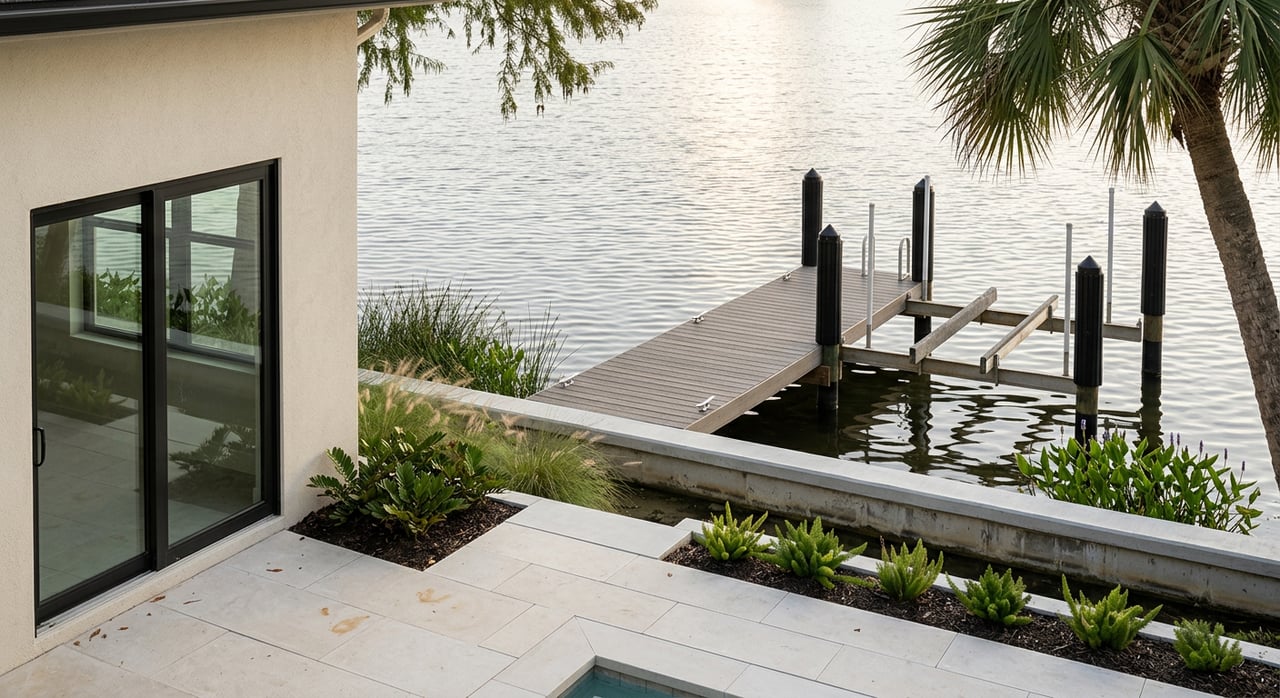
The depth at your shoreline and the width of the approach channel decide what kind of dock and lift you can build and what boats you can use. Deeper water with a clear approach lets you install a covered lift and operate larger boats with less hassle. Shallow entries or narrow channels may limit boat type, increase dock length, or require extra approvals.
In Orange County, shoreline alterations and dredge activities are regulated. Many seawall, riprap, or dredge projects require a Shoreline Alteration or Dredge and Fill permit. For in-water structures like docks, state and federal programs also apply. Review the county’s permit guide for details on the process and who regulates what: Orange County shoreline alteration and dredge permits.
Shoreline frontage and price per front foot
Usable shoreline acts like a second lot size on the water side. Appraisers often study price per linear foot of usable frontage when enough lakefront comps exist on the same waterbody, then adjust for view, depth, and dock condition. It is a common valuation tool, but it is not the only one. Front footage without depth, a permitable dock location, or a stable seawall will not deliver the premium you expect. For context on how appraisers think about frontage, see this discussion of price per front foot in waterfront appraisal.
Views, orientation, and sunlight
View quality matters. Unobstructed panoramic water views, wide bay exposures, and west-facing orientations that capture sunset light can lift buyer interest and price. Appraisers consider view and orientation as identifiable, quantifiable attributes when they analyze comps. When you compare two homes, ask yourself which view is more permanent, broader, and framed by fewer obstructions.
Privacy, traffic, and boating style
Some parts of the chain are social hubs with heavy weekend boating. Others are quieter coves that appeal to buyers who prize calm water and privacy. The right fit depends on your lifestyle, but it also impacts value. Areas with active skiing or frequent anchoring attract one buyer pool, while sheltered locations with limited through traffic attract another. Local enforcement and lake management practices shape these patterns across the chain. You can learn more about the system and stewardship in the Butler Chain resources.
Access and ramps: who gets on the water
Boat access is a key value driver. Within Windermere town limits, there is an Orange County public ramp to Lake Down and two resident-only ramps that serve Lake Butler and Lake Bessie. The town issues park and ramp passes to residents, and private communities may have deeded ramps or marina slips. These access differences change who boats from your shoreline and how convenient it is to launch or host guests. Review the town’s page on Butler Chain access and resident passes and the Windermere permits and passes page.
Permits, HOAs, and insurance
- Docks, seawalls, and dredging. Many shoreline projects require county permits, and in-water structures often involve state and federal authorizations. An unpermitted dock or seawall can reduce marketability and delay closing. Review Orange County’s process and agencies in the Natural Resource Permits guide.
- HOA and private-club rules. Communities such as country-club neighborhoods may control dock sizes, boathouses, or slip assignments through deed restrictions or membership documents. Always verify claims about deeded access or dock rights with the governing documents and the association.
- Flood zones and insurance. Some lakefront parcels fall within higher-risk flood designations, which can trigger a lender requirement for flood insurance. Check your specific address using the FEMA Map Service Center and request current quotes to understand carrying costs.
What this means for pricing and appraisals
When appraisers work on the same lake or bay, they study closed comps and may benchmark price per front foot, then adjust for orientation, view breadth, depth, dock type, and seawall condition. That approach helps separate two homes that look similar on paper but live very differently on the water. The key is pairing like with like. A quiet cove with limited depth should not be compared straight across to a wide, deep, sunset-facing lot without thoughtful adjustments.
Quick comparison checklist for Windermere waterfront
Use this list when you compare two lakefront homes in the Butler Chain:
- Exact lake identity and connections. Confirm which lake you sit on and your route to other basins. Larger, well-connected water often commands a premium. Start with the Butler Chain overview.
- Water clarity and recent advisories. Review clarity trends and any recent herbicide or algae notices in the Water Atlas news archive.
- Dock and seawall permits. Ask for permit records and inspection or repair history. Cross-check requirements in the Orange County shoreline permits guide.
- Frontage and depth at the dock. Measure linear feet and verify usable, permitable shoreline. Check approach depth and channel width for your boat type.
- HOA, deed, and club rules. Request covenants and membership terms for dock sizes, boathouses, or slip rights. See the town’s permits and passes page for local access context.
- Flood zone and insurance. Verify the exact FEMA designation and get quotes early via the FEMA Map Service Center.
- Like-for-like comps. Ask for closed sales on the same lake and, ideally, the same bay, noting frontage, dock type, depth, and orientation. Appraisers often apply a price-per-front-foot lens with further adjustments. Here is an example reference on front-foot analysis in appraisal.
For sellers: steps to protect and present value
- Gather your permits and surveys. Organize dock, seawall, and past repair permits so buyers and appraisers can underwrite quickly.
- Inspect shoreline structures. A recent seawall and dock inspection can remove doubt and reduce re-trade risk during escrow.
- Showcase the view. Trim shoreline vegetation within allowed rules to reveal long views, and schedule listing photos near golden hour if you have sunset orientation.
- Clarify access. If you have HOA marina rights, a resident ramp, or a deeded slip, present the governing documents and a simple diagram.
- Prepare insurance info. Provide current flood and wind policies with elevation data if available. It helps buyers budget carrying costs.
For buyers: how to shop with confidence
- Test the route. Visit by boat if possible. Confirm how quickly you reach open water and whether weekend traffic affects your cove.
- Verify depth and dock potential. Ask for soundings at the dock location and any prior dock permits or plans.
- Check clarity and treatment history. Review recent conditions using the Water Atlas news archive so you know what to expect seasonally.
- Read the rules. Request HOA documents, deed restrictions, and any club membership terms that govern slips or boathouses.
- Price apples to apples. Compare to closed sales on the same lake with similar frontage, view, and depth. Use adjustments, not averages.
Ready to talk shoreline value?
Windermere rewards buyers and sellers who do their homework. When you match the right lake, depth, view, and access to your lifestyle, you get more enjoyment and protect long-term value. If you are considering a move or want a precise read on your property’s waterfront premium, our team is ready to help you evaluate permits, comps, and positioning.
Connect with Real Estate Connect for a thoughtful pricing strategy or to explore listings that fit how you want to use the Butler Chain. Get your Instant Home Valuation and start the conversation with Real Estate Connect.
FAQs
How do different Butler Chain lakes affect value in Windermere?
- Larger, well-connected lakes like Butler, Tibet, and Down support broader recreation and typically attract more demand. Start with the Butler Chain overview to see size and connectivity.
Does water clarity really change sale prices for lakefront homes?
- Yes. Research shows water clarity is capitalized into nearby home prices, with the strongest effect at the shoreline. Review the peer-reviewed clarity study.
What permits are required for a new dock or seawall in Orange County?
- Many seawall and dredge projects need county Shoreline Alteration or Dredge and Fill permits, and docks may involve state and federal authorizations. See the county permit guide.
How do HOA or club rules change boating access and value?
- HOAs and clubs can set dock sizes, boathouse limits, slip assignments, or membership requirements. Verify any deeded access or marina rights with the governing documents and the town’s permits and passes page.
Do Windermere lakefront homes require flood insurance?
- If your property lies in a Special Flood Hazard Area and you have a federally backed mortgage, flood insurance is typically required. Confirm your zone at the FEMA Map Service Center and request quotes early.