If you are selling a horse farm in Ocala, you are not just listing a home with extra land. You are bringing a specialized property to a highly informed buyer pool in one of the most recognized equestrian markets in the country. That means your preparation, pricing strategy, and marketing package all need to reflect how horse buyers actually evaluate acreage, barns, footing, drainage, and access. This guide walks you through what to do before listing, how to market the property well, and what to expect from contract to closing. Let’s dive in.
Why Ocala horse farm sales are different
Ocala and Marion County sit at the center of a uniquely active equestrian economy. Marion County officially brands itself the Horse Capital of the World®, and county and industry materials show that equine activity spans a large share of the area while contributing billions in annual economic impact.
That matters when you sell. Buyers in this market often look beyond the house first and ask practical questions about usable pasture, fencing, barn setup, trailer circulation, drainage, storage, and how the property functions day to day.
Local equestrian infrastructure also shapes demand. The World Equestrian Center - Ocala describes itself as the largest equestrian complex in the United States, and major venues like HITS Ocala and Florida Horse Park help bring owners, trainers, and competitors into the region.
Start with records and compliance
Before you think about photography or showings, gather the documents that help a buyer understand the property clearly. For many horse farm sales, this step can save time later and reduce the risk of delays during contract negotiations.
A strong pre-listing file should include:
- Survey
- Deed
- Permit history
- Utility maps
- Insurance records
- Records of any open code or zoning matters
Marion County offers online access for permit applications, inspections, property verification, and lien or case searches. That makes it a good starting point if you need to confirm whether structures or improvements are documented properly.
Verify improvements and zoning
Horse properties often include barns, sheds, arenas, driveways, worker areas, and other improvements added over time. Marion County Growth Services regulates building location, size, and related zoning compliance, so it is smart to confirm that key improvements were permitted or otherwise comply with applicable rules.
This matters because buyers may ask early questions about legality, use, and future flexibility. If there is confusion around a barn, arena, or other structure, that uncertainty can affect both confidence and timing.
Review agricultural classification
If your property benefits from agricultural classification, review that status before listing. Under Florida law on agricultural classification, filing is annual by March 1, and the property appraiser may require proof of bona fide agricultural use.
If the use of the property has changed, reclassification may be possible. That does not mean a sale cannot move forward, but it does mean you should understand the current status so you can communicate accurately with buyers.
Prepare disclosures the right way
Florida sellers have important disclosure duties, and those duties still apply even if you plan to sell the property as-is. According to Florida real estate disclosure guidance, sellers must disclose known facts that materially affect value and are not readily observable.
For acreage and horse properties, this can be especially important because some defects are not obvious during a quick tour. Drainage issues, utility concerns, well or septic problems, prior code matters, and hidden structural defects can all become major points once inspections begin.
Key disclosures to review
Before listing, review whether any of the following apply:
- Latent material defects
- Flood disclosure requirements for residential property
- Known sanitary sewer lateral defects
- Pending code-enforcement actions
If a code-enforcement action is pending, Florida Realtors notes that it must be disclosed in writing and the buyer must be told the new owner will be responsible for compliance. Getting ahead of these issues can make your sale smoother and more credible.
Focus on the farm’s physical condition
A horse farm does not need to look perfect, but it does need to look functional, safe, and manageable. In Ocala’s equestrian market, buyers often notice operational details quickly.
Your goal is to show that the property has been maintained with care. That includes the areas horses use every day, not just the residence and front entry.
Improve pasture and fencing
Pasture condition has a big impact on first impressions. Guidance from the University of Minnesota Extension on horse pastures and facilities recommends safe permanent fencing, avoiding barbed wire, and maintaining dry lots with access to water and shelter.
The same guidance highlights the value of manure removal and mud control. High-traffic pads, swales, gutters, and siting on higher ground can help preserve turnout areas and improve usability.
Clean and safety-check barns
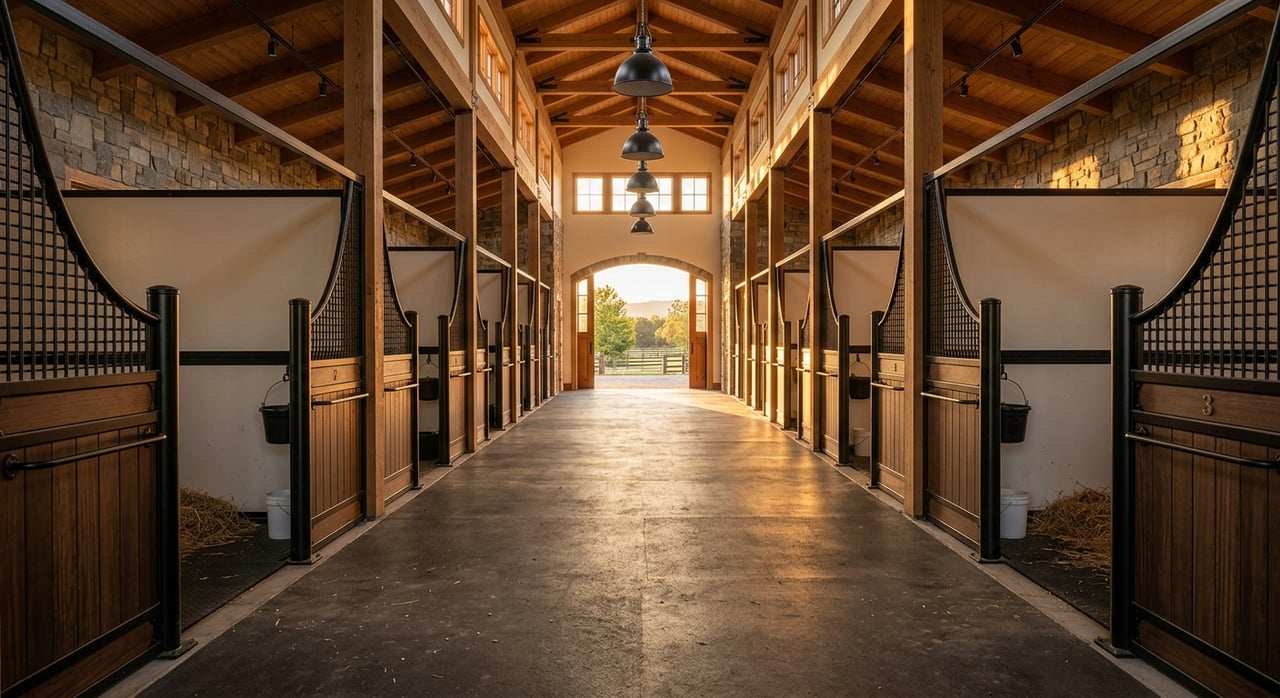
Barns should feel orderly and safe. Rutgers Extension barn safety guidance recommends removing debris, keeping aisles clear, making sure lighting works well, checking latches, and storing hay away from heat or electrical sources.
Simple improvements can go a long way here. Clean tack spaces, organized feed rooms, visible fire extinguishers, and accessible first-aid supplies all help reinforce that the facility is cared for properly.
Refresh arena and work areas
Arena footing and high-use work surfaces should also be maintained before the property goes live. The University of Kentucky’s arena footing guidance notes that footing shifts and compacts over time, which makes dragging, leveling, and checking depth important.
Before photos and tours, remove loose equipment and visual clutter. Jumps, poles, tractors, hoses, wheelbarrows, and other tools can make a good setup feel harder to manage than it really is.
Stage the property for marketing
When you sell a horse farm, staging is about more than curb appeal. You want the property to feel easy to understand and easy to operate.
That usually means mowing, edging, pressure washing, sweeping barn aisles, emptying trash, and making sure gates open smoothly. It also helps to label utility access points and clear the route a trailer would use to enter, turn, and park.
Think like an equestrian buyer
A serious buyer will likely picture daily routines while touring the property. They may ask how horses move from barn to turnout, where feed and bedding are stored, whether trailers can navigate easily, and how the farm performs in wet weather.
The cleaner and more intuitive those answers are, the stronger your listing becomes. Good presentation supports value because it reduces uncertainty.
Build a data-rich listing package
A standard home listing rarely tells the whole story for a horse farm. In Ocala, your marketing package should function more like a clear operating overview of the property.
That package should ideally include:
- Acreage map
- Barn and stall count
- Arena dimensions
- Footing type
- Pasture layout
- Water source information
- Trailer access details
- Storage areas
- Zoning or agricultural status
Because Ocala is anchored by major equestrian destinations like World Equestrian Center - Ocala, local context can also help buyers understand the property’s positioning in the broader market. Proximity to equestrian venues and services can be part of the property story when presented factually and clearly.
Consider a pre-listing inspection
On specialized properties, surprises during the buyer’s inspection period can be expensive and stressful. That is one reason a pre-listing inspection is often worth considering.
Florida Realtors notes that pre-listing inspections can help sellers identify issues earlier, address repairs before going under contract, and build buyer confidence. For horse farms, that can be especially useful where there are multiple structures, systems, and utility questions.
Well and septic deserve attention
Many Marion County acreage properties rely on private wells and septic systems. Marion County reports that it has more than an estimated 124,000 septic tanks, and the Florida Department of Health recommends annual private well testing for bacteria and nitrate.
Well sampling is not required statewide when a private home is sold, but testing before listing can help you answer buyer questions with more confidence. If the property is on septic, the Florida homebuyer septic guide says a voluntary inspection and assessment can help identify repair issues that may affect negotiations.
Evaluate offers beyond the price
The highest offer is not always the strongest offer. With an Ocala horse farm, the best contract is often the one with the right combination of price, certainty, and timing.
When you compare offers, look at the full picture:
- Financing strength
- Inspection contingency terms
- Appraisal risk
- Survey and title issues
- Requested repairs or credits
- Proposed closing date
According to the National Association of Realtors February 2025 confidence survey, median days to close were 30, while some delayed settlements were tied to appraisal issues. That is a useful reminder that smooth closings depend on more than headline price.
Plan for a realistic closing timeline
Most horse farm sales take planning. In practical terms, you should expect several weeks of preparation before listing, then roughly a month from contract to closing for a financed transaction, with more time if inspections, title, appraisal, permit, survey, or utility issues need attention.
The closing process itself also has built-in timing rules. The Consumer Financial Protection Bureau explains that buyers must receive a Closing Disclosure at least three business days before closing, and some closings take longer when signatures and document review happen in stages.
Common bottlenecks to solve early
The easiest way to protect your timeline is to tackle common delay points before the property hits the market. These often include:
- Outdated or missing surveys
- Unresolved permit questions
- Well test concerns
- Septic condition questions
- Easement confusion
- Incomplete disclosures
- Title or lien issues
When these items are organized upfront, buyers tend to feel more comfortable moving forward. That can improve both negotiating leverage and the odds of a cleaner closing.
A practical seller roadmap
If you want a simple plan, start here:
- Confirm agricultural classification status.
- Pull permit, survey, and lien records.
- Review all required seller disclosures.
- Test well water if applicable.
- Inspect the septic system if applicable.
- Repair fencing, gates, drainage, and safety issues.
- Refresh arena footing and key work areas.
- Stage the farm for photos and tours.
- Prepare a data-rich listing package.
- Review offers based on strength, not just price.
Selling an Ocala horse farm is part real estate transaction and part operational presentation. When the property is documented well, maintained well, and marketed with the right level of detail, you put yourself in a much stronger position from day one.
If you are preparing to sell and want an owner-led team that understands acreage, equestrian infrastructure, and the local Ocala market, connect with Real Estate Connect. You will get practical guidance from preparation to closing, with a strategy built around how specialized properties actually sell.
FAQs
What makes selling a horse farm in Ocala different from selling a regular home?
- Ocala horse farm buyers often evaluate the land and equestrian infrastructure as closely as the home itself, including pasture usability, fencing, barns, arena footing, drainage, trailer access, and property records.
Do you need to disclose defects when selling an Ocala horse farm as-is?
- Yes. Under Florida disclosure rules, sellers must still disclose known facts that materially affect value and are not readily observable, even in an as-is sale.
Should you test the well before listing a horse farm in Marion County?
- It is not required statewide for a sale, but the Florida Department of Health strongly recommends annual testing for private wells, including bacteria and nitrate.
Should you inspect the septic system before selling a Marion County acreage property?
- Yes, if the property uses septic, a voluntary inspection can help identify issues early and reduce negotiation problems later.
How long does it take to sell an Ocala horse farm from listing to closing?
- A practical planning estimate is several weeks of pre-listing preparation plus about 30 days under contract for a financed sale, though complex properties can take longer if appraisal, title, permit, survey, well, or septic issues come up.
What documents should you gather before listing a horse farm in Ocala?
- Start with the survey, deed, permit history, utility maps, insurance records, and any records tied to open code, zoning, or lien matters.